
UptimeRobot Alternative
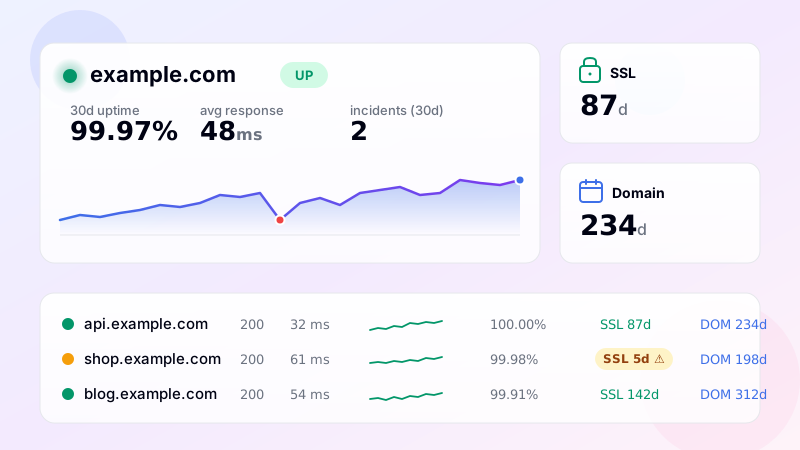
Looking for an UptimeRobot alternative that catches SSL expiry, domain expiration, and DNS changes — not just dead pages? DiagnoSEO bundles those into the same dashboard.
Try DiagnoSEO Uptime Monitoring →
Why people look for an UptimeRobot alternative
UptimeRobot is the default. Two and a half million users, generous free tier, the brand that comes up first when somebody asks for an uptime monitor. For checking whether a page loads, it is fine.
The reasons people start searching for an alternative tend to fall into three buckets:
- Free plan restrictions changed in late 2024. Commercial use was restricted on the free tier. Anyone running checks for client sites or revenue-generating apps now needs a paid plan. Suddenly the "free forever" pitch had asterisks.
- Adjacent features are missing or cost extra. SSL monitoring is included, but domain expiry tracking is not. DNS change detection is not. Keyword monitoring is basic. JSON assertions for API monitoring are not supported. Heartbeat / cron-job monitoring is an add-on.
- The dashboard is a single tool, not a platform. Multi-region, alerting, status pages — all there. But there is no link to SEO data, no backlink monitoring, nothing that ties uptime to organic traffic outcomes. Two separate dashboards, two separate subscriptions.
DiagnoSEO Uptime Monitoring exists in a different shape. It is bundled with a full SEO toolkit (keyword rankings, backlinks, site audits) and treats uptime as part of SEO infrastructure protection. The thinking: a domain that expires deindexes overnight, an SSL warning kills click-through, a redirect chain leaks link equity. Catching these belongs in the same dashboard that tracks rankings, not in a separate tool you check once a month.
Feature comparison
| Feature | DiagnoSEO | UptimeRobot |
|---|---|---|
| Free plan | 5 monitors (preview, no commercial restriction) | 50 monitors, 5-min (non-commercial only since 2024) |
| Minimum check interval | 1 minute (Pro+) | 1 minute (paid) |
| Multi-region checks | 13 regions | Multi-region |
| SSL expiry alerts | ✅ 30/14/7/3/1d | ✅ |
| Domain expiry tracking | ✅ Included | ❌ |
| DNS change detection | ✅ Included | ❌ |
| Keyword monitoring (present / absent) | ✅ both modes | ✅ single mode |
| JSON assertions for API monitoring | ✅ | ❌ |
| Heartbeat / cron-job monitoring | ✅ Included | ⚠️ Add-on |
| Bulk add via paste | ✅ (100+ URLs) | ⚠️ Paid plans |
| Telegram, Slack, Discord alerts | ✅ All included | ✅ |
| SMS alerts | ✅ | ⚠️ Add-on credits |
| Public status pages | Coming soon | ✅ |
| Keyword research bundled | ✅ full SEO suite | ❌ |
| Backlink monitoring bundled | ✅ Enterprise | ❌ |
| Site audit bundled | ✅ | ❌ |
| Entry pricing | From $7/mo (full suite) | From $9/mo (uptime only) |
Where DiagnoSEO wins
SEO infrastructure framing. Uptime, SSL, domain expiry, and DNS changes are in one dashboard alongside keyword rankings and backlink data. When a domain is about to expire, the warning shows up in the same place as the ranking drop it will cause. UptimeRobot has no equivalent.
Domain expiry tracking. Many domains die not from bad code but from a forgotten renewal notice. DiagnoSEO checks WHOIS for every monitored domain and warns 30, 14, 7, 3, and 1 day out. UptimeRobot does not check WHOIS at all.
DNS change detection. If your A, AAAA, MX, NS, or CNAME records change unexpectedly — DNS hijack, accidental config push, a third party provider changing endpoints — DiagnoSEO alerts on the change itself, not just the resulting downtime. UptimeRobot only sees the downtime if it happens.
JSON assertions. For API monitoring: assert that data.status equals ok, that result.count is greater than zero, that a specific field exists. Catches APIs that return HTTP 200 with malformed payloads. UptimeRobot only does keyword presence.
No "non-commercial only" trap. The free DiagnoSEO tier has fewer monitors (5 vs 50) but no commercial-use restriction. A small business or freelancer can use it for client sites without violating terms.
Where UptimeRobot wins
Honest assessment, not a hit-piece. UptimeRobot has real strengths.
Free tier monitor count. 50 monitors free vs 5 free on DiagnoSEO. For somebody running 30 personal sites with no commercial use, UptimeRobot's free tier is unbeatable.
Brand recognition and ecosystem. Tutorials, integrations with third-party tools, Zapier hooks, dozens of years of blog content. Easier to onboard a non-technical team because everybody has heard of it.
Public status pages. UptimeRobot has mature status page features — custom domains, branding, subscription. DiagnoSEO's status pages are in development.
Single-purpose simplicity. If you do not need SEO data, having a tool that does only uptime is a fair preference. Fewer features in the sidebar.
Migration from UptimeRobot to DiagnoSEO
The migration takes 10-15 minutes for a typical 20-monitor setup.
- Export from UptimeRobot. Settings → My Settings → Export Monitors (CSV). Includes URL, monitor name, interval, and type.
- Open DiagnoSEO Uptime Monitoring. Click "Add monitor" → switch to "Bulk add" tab.
- Paste URLs one per line. Optional parameters per line:
https://example.com keyword:Add to cart interval:1 tag:prod name:Production checkout. - Save. All monitors created in a single transaction. First check runs immediately for every URL — within 1 minute the dashboard populates with SSL, domain expiry, and DNS data automatically.
- Reconfigure alerts. Notifications → set up Email (already configured), Telegram (chat ID), Slack (webhook), Discord (webhook), and SMS recipient lists. Mirror what you had in UptimeRobot.
- Optional: run both tools in parallel for a week. Verify alerts arrive from DiagnoSEO before pausing UptimeRobot. Cancel UptimeRobot subscription only after a full week of parallel running.
Frequently asked questions
-
For uptime-only use, the cheapest paid tiers are close: UptimeRobot Solo is $9/mo, DiagnoSEO Basic is $7/mo. But DiagnoSEO Basic includes the full SEO suite (keyword tracking, site audits, lite backlinks) — features that would cost $30-50/mo as separate tools. If you already use any SEO tool, the combined cost comes out significantly lower.
-
There is no one-click UptimeRobot importer (their export does not include the API token or webhook config, only the basic monitor list). Use the bulk add feature: export UptimeRobot CSV, paste the URL column into DiagnoSEO's bulk add textarea, save. 20 monitors take about 2 minutes to migrate.
-
Public status pages are in development and expected to ship in a future iteration. If status pages are a hard requirement today, UptimeRobot is the better choice. If you only need internal monitoring and alerts (most teams), DiagnoSEO covers the use case.
-
In late 2024, UptimeRobot restricted the free plan to non-commercial use only. Anyone running checks for a client, agency, employer, or revenue-generating product technically needs a paid plan. DiagnoSEO's free tier has fewer monitors (5 instead of 50) but no commercial-use restriction — freelancers and small agencies can use it without violating terms.
-
Yes. DiagnoSEO supports JSON path assertions: specify a path like
data.statusand an expected value likeok, or assert that a field exists or is greater than zero. Catches APIs that return HTTP 200 with malformed or partial payloads. UptimeRobot does not have this — its keyword check only does substring matching on the raw response body.
Pingdom · BetterStack · Oh Dear · Site24x7 · StatusCake · Sentry · Uptrends · Cronitor · New Relic
SSL monitoring · Domain expiry · DNS monitoring · Ping (ICMP) · Port (TCP) · Endpoint · Keyword · API · Cron / Heartbeat · Response time · Backlink · Location-specific · Website monitoring